Briefing et débriefing en sport de haut niveau
Un processus circulaire au service de la haute performance et du bien-être
Mots-clés :
briefing, débriefing, haute performance, communication, relation coach-athlète, bien-être sportifRésumé
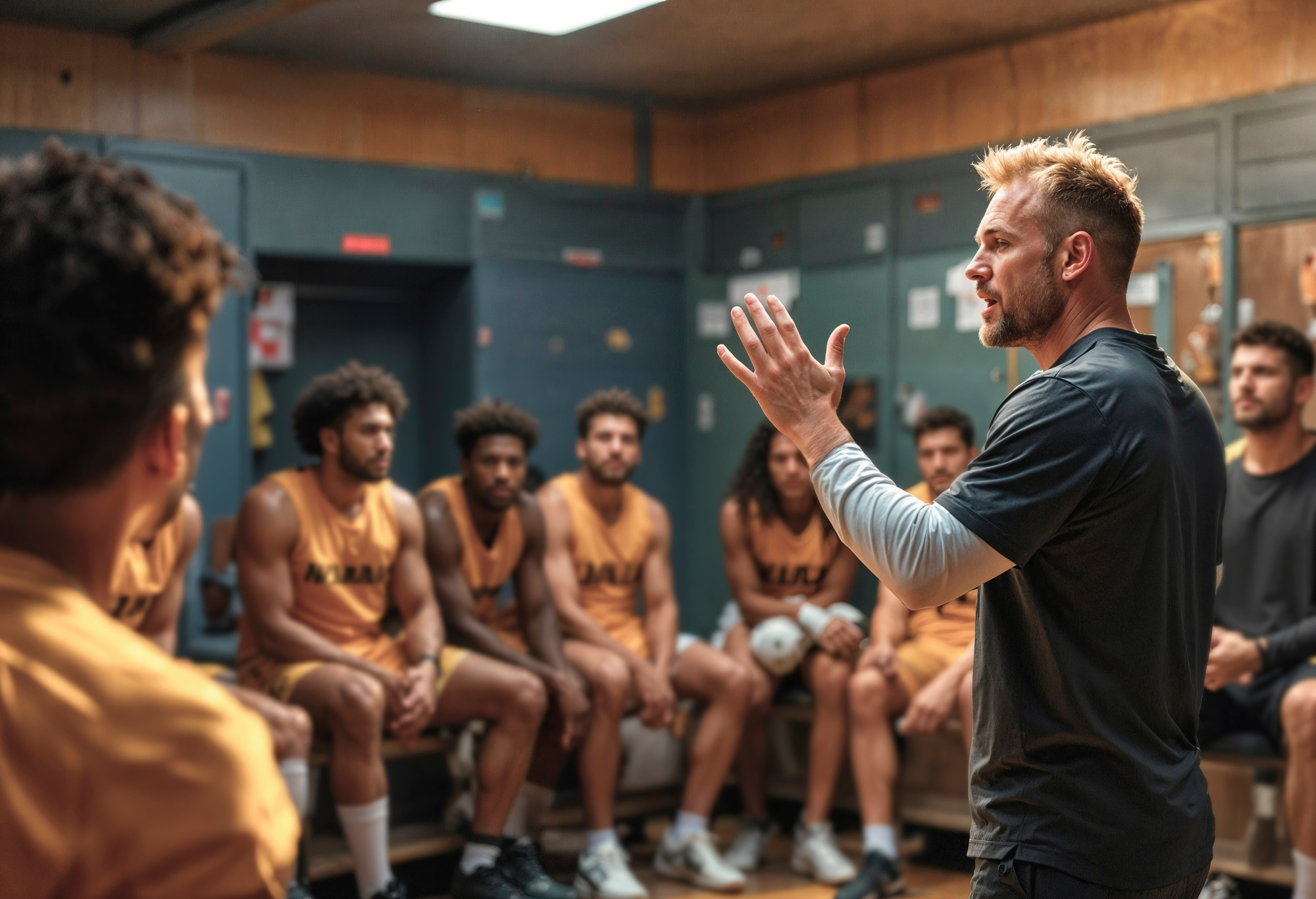
L’importance du briefing et du débriefing est largement reconnue en sport (Hogg, 2002) et plus particulièrement en sport de haut niveau. Malgré cette importance, peu de travaux de recherche ont été menés dans le sport de haut niveau (Macquet et Stanton, 2021) et les formations des entraîneurs abordent peu le briefing et le débriefing en tant que tels ; elles se centrent plutôt sur les compétences nécessaires pour effectuer un débriefing. Briefing et débriefing sont des discussions et des échanges entre les personnes. Ils visent la performance (Macquet et Stanton, 2021 ; Mesquita et al., 2005) et le développement personnel et collectif des sportifs de haut niveau (SHN) et de leur encadrement (Macquet, Ferrand et Stanton, 2015).
Références
Bass, B. M. (1999). Two decades of research and development in transformational leadership. European Journal of Work and Organizational Psychology, 8(1), 9-32.
Brasseur, S., Grégoire, J., Bourdu, R., Mikolajczak, M. (2013). The profile of emotional competence (PEC): development and validation of a self-reported measure that fits dimensions of emotional competence theory. Plos one, 8(5).
Breakey, C., Jones, M., Cunningham, C. -T., Holt, N. (2009). Female athletes' perceptions of a coach's speeches. International Journal of Sports Sciences et Coaching, 4(4), 489-504.
Byrd, M., Maurice, S., Charalambous, C., Garcia, S. et Searle, M. (2021) Bridging the gap and finding purpose: An approach for debriefing in applied sport, exercise and performance psychology. Journal of Sport Psychology in Action. Doi: 10.1080/21520704.2021.2002989
Chow, G. M. et Luzzeri, M. (2019). Post-Event Reflection: A Tool to Facilitate Self-
Awareness, Self-Monitoring, and Self-Regulation. in Athletes. Journal of Sport
Psychology in Action, 10 (2), 106-118. doi.org/10.1080/21520704.2018.1555565
Dyregrov, A. (1997). The process in psychological debriefings. Journal of Traumatic Stress, 10(4), 589‑605. https://doi.org/10.1002/jts.2490100406
Fischhoff B. (2013). Risk Analysis and Human Behavior. New York: Routledge.
Hogg, J. M. (2002). Debriefing: A means to increasing recovery and subsequent performance. In Kellemann (Ed.), Enhancing recovery: Preventing underperformance in athletes (pp. 181-198). Champaign, IL: Human Kinetics.
Gross, J. J. (1998). The emerging field of emotion regulation: An integrative review. Review of General Psychology, 2(3), 271-299.
Jensen, E. (2009). Sensemaking in military planning: A methodological study of command teams. Cognitive Technology and Work, 11, 103-118. Doi: 10.1007/s10111-007-0084-x
Lainé, M., Mouchet, A., et Sarremejane, P. (2016). Le discours d'avant-match des entraîneurs de rugby: des temps d'intervention enchâssés. In B. Lenzen, D. Dering, B. Poussin, H. Denervaud, et A. Cordoba (Eds.), Temps, temporalité et intervention en EPS et en sport (pp. 199-219). Bern: Peter Lang.
Macquet, A. - C., Ferrand, C., et Stanton, N. A. (2015). Divide and rule: A qualitative analysis of the debriefing process in elite team sports. Applied Ergonomics, 51, 30-38. doi: 10.1016/japergo.2015.04005.
Macquet, A. -C., Macquet, A., et Pellegrin, L. (2023). Risk-taking: An opportunity to win in elite sports. G. A. Boy, E. Quillerou (Eds.), Risk-ttaking, prevention and design, pp. 75-92. Boca Raton, CRC Press Taylor and Francis group.
Macquet, A. - C., et Stanton, N. A. (2014). Do the coach and athlete have the same picture of the situation? Distributed situation awareness in an elite sport context. Applied Ergonomics, 45, 724-733. doi: 10.1016/J.APERGO.2013.09.014
Macquet, A. - C., et Stanton, N. A. (2021). How do head coaches brief their athletes? Exploring transformational leadership in elite team sports. Human Factors and Ergonomics Manufacturing, 31(5), 506-515. Doi: 10.1002/hfm.20899
Mesquita, L., Rosa, G., Rosado, A., et Moreno, P. (2005). Analysis of content interventions of volleyball coaches in the preparation competitive meeting- Comparative study between coaches of male and female senior teams. Apunts, Educacion Fisica y Deportes, 3, 61-66.
Méthode ORfevre [document non publié de l’Agence Nationale du Sport]
Salas, E., Sims, D. E., et Burke, C. S. (2005). Is there a “big five” in teamwork? Small Group Research, 36(5) 555-599. Doi: 10.1177/1046496405277134
Schön, D. A. (1997). Le praticien réflexif. Les éditions logiques
Rosenberg, M. B. (2023). La communication non violente. Editions Jouvence
Stanton, N. A., Salmon, P. M., Walker, G. H., et Jenkins, D. P. (2010). Is situation awareness all in the mind? Theoretical Issues in Ergonomics Science, 11, 29-40. doi: 10.1080/14639220903009938
Vargas-Tonsing, T. M. (2009). An exploratory examination of the effects of coaches' pre-game speeches on athletes' perceptions of self-efficacy and emotion. Journal of Sport Behavior, 32, 1, 92-110.
Wacker, J., et Kolbe, M. (2014). Leadership and teamwork in anesthesia. Trends in Anesthesia and Critical Care, 4, 200-205. Doi: 10.1016/j.taccc.2014.09.002
Publiée
Numéro
Rubrique
Catégories
Licence
(c) Copyright INSEP éditions 2026

Ce travail est disponible sous licence Creative Commons Attribution - Pas d'Utilisation Commerciale - Pas de Modification 4.0 International.